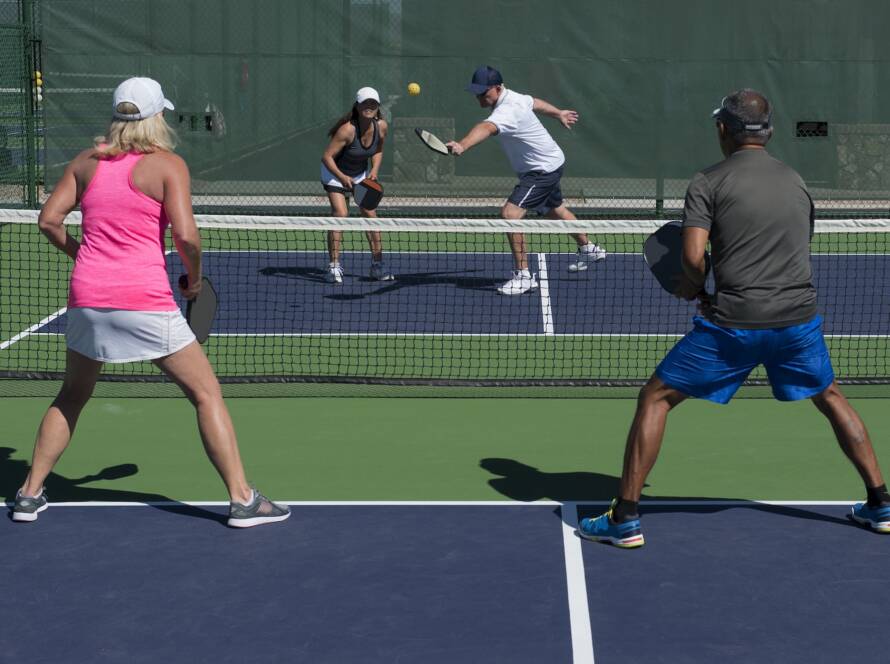
Can you hit a pickleball with your hand? The answer surprises many players: yes, but only under very specific circumstances. In pickleball, where precision and proper technique define the sport, understanding the rules around hand contact with the ball is critical to staying in play and avoiding costly faults. Whether you’re a newcomer wondering about the basic mechanics or an experienced player seeking to clarify edge cases, this question sits at the intersection of rules interpretation and practical court awareness. USA Pickleball Rule 7.H governs all contact between the ball and a player’s body, clothing, or equipment, and this rule contains a nuanced exception that allows limited hand contact in particular situations. The confusion around what constitutes legal versus illegal hand contact has led to disputes on courts everywhere, making it essential to understand exactly when touching the ball with your hand results in keeping the rally alive or losing the point. This guide breaks down the official rules, clarifies common misconceptions, and provides practical strategies to help you navigate hand contact situations with confidence. Read on to discover when a hand hit is legal, what happens when the ball makes contact with your body or clothing, and how to train your reflexes to stay compliant with pickleball’s hand contact rules.
Can You Hit a Pickleball with Your Hand? Understanding Rule 7.H
The Core Answer: Legal Hand Contact in Pickleball
Many players wonder whether they can hit a pickleball with their hand during play. The straightforward answer is: you can legally contact the ball with your paddle hand below the wrist while holding your paddle, and the rally continues if you successfully return the shot. This exception is outlined in USA Pickleball Rule 7.H, which governs all ball contact scenarios. According to official guidance, if the ball touches your hand below the wrist, the ball remains in play and the point continues.
However, intentional or accidental contact with any other body part results in a fault against you. Understanding this distinction helps you play confidently and avoid unnecessary point losses.
What Rule 7.H Actually Says About Hand Contact
Rule 7.H defines what happens when the ball contacts a player or anything they wear or carry. The general principle is straightforward: if the ball hits your body, clothing, hair, or accessories, it is normally a fault on that player.
The critical exception allows the paddle hand below the wrist to be treated as part of the paddle itself. This means that if the ball deflects off this zone while you are holding your paddle and you return it in a continuous motion, play remains live. This protection covers both the palm and back of the hand, provided contact occurs below the wrist line.
Legal vs. Fault Hand Contact: Key Differences
When Hand Contact Is Legal
Hand contact is legal only under these specific conditions:
- The ball contacts your paddle hand below the wrist while you are holding the paddle
- You return the ball as part of a continuous stroke
- Contact occurs during a two-handed stroke where both hands remain below the wrist and in contact with the paddle
In these scenarios, the ball is treated as if it contacted the paddle, and the rally continues without penalty.
When Hand Contact Results in a Fault
A fault occurs if the ball contacts:
- Your non-paddle hand anywhere on the body
- Your paddle hand above the wrist
- Any other body part (shoulders, torso, legs, head, neck)
- Your clothing, hair, hat, glasses, or accessories
- A dropped paddle (if you then hit the ball with your hand alone)
If you drop your paddle and attempt to hit the ball with your bare hand, that is not legal. However, if you are holding your paddle and the ball contacts your hand and paddle together below the wrist, that is legal.
Common Mistakes and Misconceptions About Hand Contact
Myth: Any Hand Contact Is Allowed if You Don’t Use the Paddle
This is false. Only paddle hand below the wrist contact is legal. Hitting with a bare hand when your paddle is dropped results in an automatic fault.
Myth: Standing Out of Bounds Means You’re Safe from Ball Contact
Incorrect. You are responsible for avoiding contact with the ball even when standing out of bounds. Being hit by the ball still results in a fault against you, regardless of your location on the court.
Catching or Carrying the Ball Is Never Legal
Catching or carrying the ball, whether with your hand or on the paddle, is always a fault. Rule updates make carrying a fault regardless of intent. Any attempt to trap, palm, or manipulate the ball with your fingers violates the carry rule and illegal contact standards.
Handball-Style Play and Paddle Handle Anchoring
Some players attempt to anchor their palm to the paddle tip and play handball-style. While technically the hand is on the paddle, manipulating the ball with fingers or an anchored palm likely violates the illegal carry rule. This style of play stretches the spirit of the rules and may be restricted in future rule updates.
Practical Steps to Avoid Hand and Body Contact Faults
Decision Process When the Ball Hits Your Hand
Step 1: Identify if contact occurred on your paddle hand below the wrist or elsewhere.
Step 2: If below the wrist and your paddle is in hand, continue the rally and return the ball. Play is live.
Step 3: If contact was with your non-paddle hand, above the wrist, or any body part, call a fault on yourself.
Positioning Tips to Reduce Hand and Body Faults
- Maintain awareness of ball trajectory and move your feet rather than reaching with your non-paddle hand
- Keep your non-paddle hand and arms tucked close when at the kitchen line to reduce your target area
- Practice reflex drills to condition your reflexes to keep only the legal hand in play
- Avoid swinging your free arm around the court, which increases accidental contact risk
Resources for Understanding Hand Contact Rules
USA Pickleball Official Rulebook
Rule 7.H serves as the central framework governing hand and body contact with the ball. Consulting the latest official rulebook ensures you have the most current interpretations. USA Pickleball regularly updates its rules, so checking for seasonal refinements keeps your understanding current.
Rule Change Submissions and Interpretations
USA Pickleball publishes rule-change submissions that provide insight into how hand contact is being debated and clarified. These entries help players understand current and potential future interpretations about intentional hand contact and paddle handle use.
Local Club and League Guidelines
Many clubs provide plain-language summaries of hand contact rules. Checking your league or club guidelines before play confirms you follow current USA Pickleball wording and any local variations.
Key Takeaways on Hand Contact in Pickleball
You can legally let the ball hit or effectively “hit” the ball with your paddle hand below the wrist while holding the paddle, and the rally continues if you return the shot. Any contact with other body parts, clothing, hair, or your non-paddle hand constitutes a fault. The distinction between legal paddle hand contact and illegal body contact is clear under Rule 7.H, enabling you to play with confidence.
Review Rule 7.H and your local club rules before your next match. Share this understanding with partners and opponents to ensure fair, consistent play. For personalized guidance on pickleball rules and technique, the Pickleball Athletic Club offers expert resources and coaching. Contact us today to improve your game and master the rules with confidence.