If you’re searching “pickleball classes near me,” you’ve probably found a dozen options that all look about the same online — a name, a price, a signup button. The differences that actually matter don’t show up in a search result: how the class is structured, whether players are grouped by skill level, and whether the court itself helps or fights you. Here’s what to check before you book, and why it matters more than the price tag.
What Counts as a “Pickleball Class”? Formats Explained
“Class” gets used loosely, and the format you book changes what you’ll actually get out of it.
- Private lessons — one-on-one time with an instructor, fully focused on your game. Fastest way to fix a specific problem (a serve, a backhand, court positioning), but the least social of the formats.
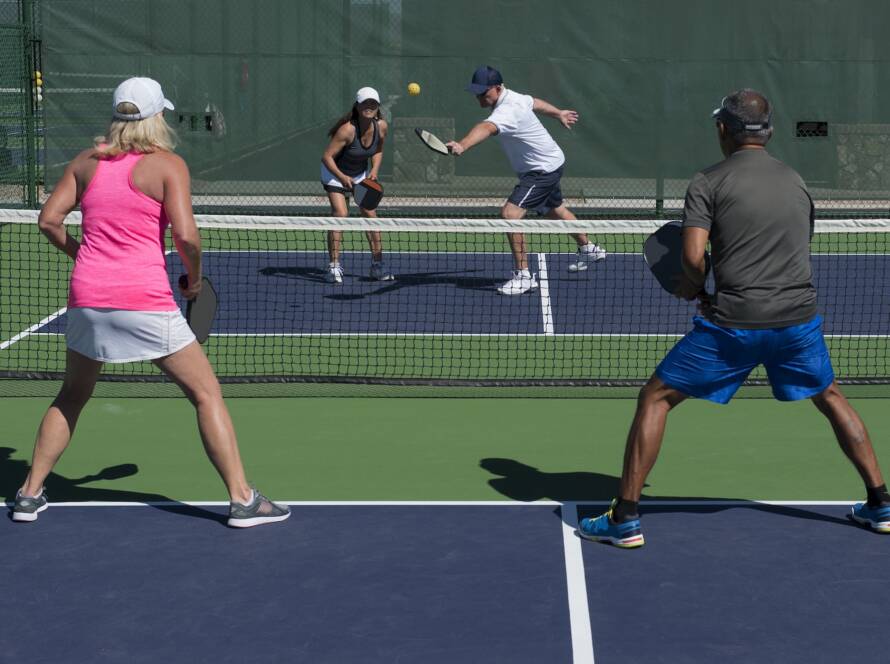
- Group clinics — a small group working through the same drills together, usually grouped loosely by skill level. More affordable than private instruction and more social, with the added benefit of hitting against different partners in a structured setting.
- Multi-week class series — a curriculum that builds week over week rather than a single drop-in session, aimed at moving players through a progression (fundamentals, then strategy, then competitive play) instead of repeating the same intro lesson.
- Open play — not a class at all, but worth knowing the difference: open play is unstructured game time, valuable for reps but not for learning something new.
Most “pickleball classes near me” searches are really looking for the second or third option — structured, groupable, recurring.
5 Things to Check Before You Book Pickleball Classes Near Me
- Skill-level grouping. A class that mixes true beginners with players who already have a season of league play under their belt shortchanges both groups. Ask how groups are formed before you book.
- Class size. More students per instructor means less individual feedback. A clinic capped at four to six players per court gets you meaningfully more attention than one run as a large group session.
- Curriculum vs. drop-in. A single drop-in class can be a fine way to try a place out, but real improvement tends to come from a series that builds on the previous week rather than restarting from scratch each time.
- Court surface and conditions. Wind, glare and surface temperature all change how a ball behaves — a skill you’re building on one surface doesn’t always transfer cleanly to another. See the next section.
- What’s actually included. Some listings price the instructor only and bill court time separately; others bundle it. Confirm what the quoted price covers before comparing two options on cost alone.
Indoor vs. Outdoor: Why Court Conditions Change the Class
This is the part that’s easy to overlook when you’re comparing classes by price alone. Outdoor courts put wind and glare into every drill — a serve that’s grooved on a calm morning behaves differently on a breezy afternoon, and sun angle changes the read on a lob depending on the time of day you book.
Pickleball Athletic Club runs its lessons and clinics on nine temperature-controlled indoor courts with 25-foot ceilings, so conditions stay the same from the first week of a class series to the last. That consistency matters most exactly when you’re building a new habit — a serve or a dink that works on Monday should still work on Thursday, not depend on which way the wind was blowing. It also means a class doesn’t get rained out or rescheduled around the forecast, which is the more common way a multi-week series quietly falls apart.
Outside of class time, the club’s Bainbridge Lounge and event space give players somewhere to be before or after a session rather than heading straight back to the parking lot — useful if you’re coming from work or bringing family along.
Matching a Class to Your Skill Level
If you’ve never picked up a paddle, start with a fundamentals-focused class or a private lesson or two before mixing into group play — walking onto a court with zero coaching context is frustrating for you and for whoever you’re paired with. If you already play regularly but want to fix specific habits, a clinic that groups by rating or experience will move faster than a general intro class. And if you’re chasing a specific skill milestone, pairing a private session for technical correction with a structured group series for repetition tends to work better than either alone.
Finding Pickleball Classes in the Conejo Valley
For players in the Conejo Valley and east Ventura County — Westlake Village, Newbury Park, Agoura Hills, Simi Valley, Camarillo and Oxnard — Pickleball Athletic Club runs lessons and clinics, along with a multi-week class progression (the PACademy) and standalone clinics and drill sessions, on its indoor courts in Thousand Oaks. Because the club is all-indoor, none of it is weather-dependent. Programs and court time are booked through book.playatpac.com.
If you’re still deciding which format is the right starting point, this comparison of private lessons, clinics and open play breaks down which one fits your current stage.
Frequently Asked Questions
Are pickleball classes good for total beginners?
Yes — in fact a beginner is exactly who benefits most from a structured class instead of jumping straight into open play. A fundamentals class establishes scoring, positioning and the basic shots before you’re navigating a live game.
What’s the difference between a pickleball class and open play?
A class is instructor-led and teaches something specific; open play is unstructured game time with whoever else shows up. They complement each other — a class builds the skill, open play is where you test it under real conditions.
How much should I expect to pay for a pickleball class?
It varies by format, class size and whether court time is bundled into the price. Confirm what’s included before comparing two listings on cost alone — see PAC’s current lesson and clinic options for one example of how pricing is structured.
Do I need my own paddle for a class?
It’s worth having your own before you start a multi-week series — feedback from an instructor is most useful when you’re consistently using the same equipment session to session. Many facilities can lend one for a single trial class.
Does it matter if a beginner class is indoor or outdoor?
For a beginner specifically, yes. You’re building fundamentals, and controlled, consistent conditions mean less of your attention goes to fighting wind or glare and more goes to the actual mechanics you’re there to learn.
Next Step
The right pickleball class is the one you’ll actually keep showing up to — which usually means the right skill grouping, a real curriculum, and conditions that don’t change out from under you week to week. See lesson, clinic and PACademy options at Pickleball Athletic Club and find the format that matches where you’re starting from.